Thursday, May 3, 2012

The Man Cave

View of the front - note the wheels
and the foot rest under the cameras

A lot of people who know me have heard about “The Man Cave,” which is my own, custom-build blind that I use for photography in my backyard. If you don’t know me (and I can’t imagine WHY you would be reading this if you don’t, but we’ll ignore your lack of judgment – for now) I am a professional wildlife photographer. I have used a variety of blinds for a number of years – mostly those pop-up camo blinds, in order to allow my subjects to get closer to me and to keep me out of the elements – more or less. They are a great tool, but they wear out, blow over in strong winds and you have to take them in and out every day. They can also get a little cramped inside with tripods, chairs, coolers and such.
A little plastic on top helps keep out the rain

About two years ago, I decided that I wanted something a bit more permanent. I knew the basic elements that I wanted – weather resistant, solid and movable. I even knew the size (4’ x 5’ x 6’ – W x L x H). Now, all I had to do was build it.

Run-flat wheels were a later addition
I got a flat early on - AAA does not service photo blinds

Sunday, May 22, 2011

Taking Wildlife Photos In The Rain

Black-chinned Hummingbird during an Arizona Monsoon
400mm, ISO 400, f/5.6, 1/40 second

Many photographers will tell you that there is never enough light. Maybe it would be better to say that there is never enough PERFECT light. To me, with the exception of a poorly cooked hamburger, nothing is more disappointing that having a photo that is both underexposed and overexposed at the same time. For example, an adult Bald Eagle flies by, banks perfectly and still, the body feathers are too dark and the white head too light so that you lose detail on both ends.

This is an example of a photo that came out poorly
because of too much light on a bright sunny day

This is usually not a problem during the “golden hours” which are thought to be an hour after sunrise and an hour before sunset. The golden hours are also known as the “magic hours” or, as I like to call them, about two hours before I haul my butt out of bed and an hour after my feet hurt so badly that I can hardly walk anymore.

Eastern Bluebird - if you look closely, you can see rain on his back
600mm, ISO 500, f/7.1, 1/320 second

Saturday, May 21, 2011

End Of The World Photos

Man Cave

You might not know it if you just watch the regular news, but the world is supposed to end today – sometime this evening. You would THINK that this might make the news, but apparently not. Now, as some of you know, I built a “man cave” a few weeks ago as a heavy-duty blind from which to take photos. I don’t mean to imply that this will protect you in the case of the world’s end, it just fits into the events of today.


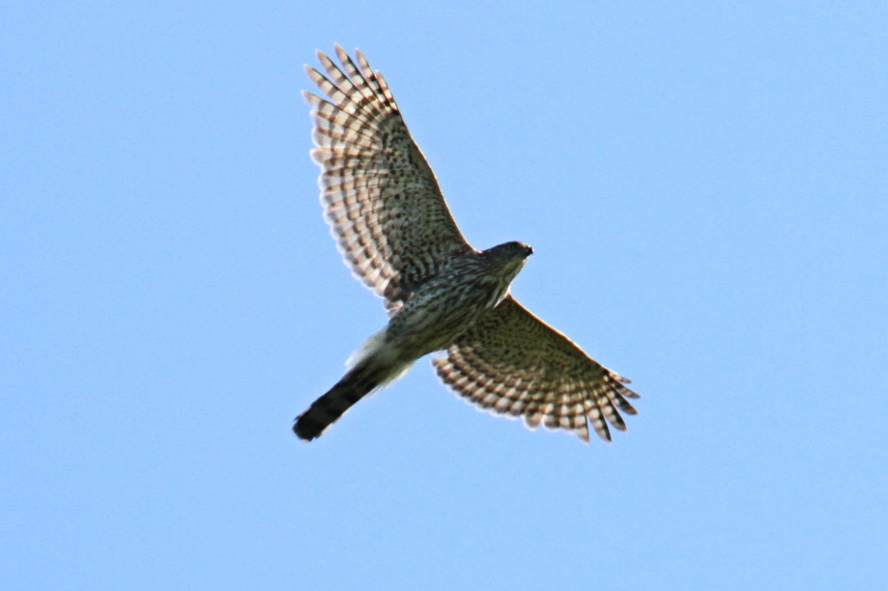
Juvie Cooper's Hawks Terrorizing the neighborhood today
Note: Raptor vs Rapture - very important difference

Side note – APPARENTLY the world isn’t actually supposed to come to and end, per se. Instead, all the good people will go up to heaven and leave the rest behind. Again, very skimpy reporting. After what I believe was the deadline, I began calling those people that I figured might be among those going to heaven. No answers from any of them. I guess that means that I might have missed the cut. If that’s the case, I am going to stop recycling.


Hummer made a showing today

Monday, May 2, 2011

House Wren Nest Building

Lots of birds building nests in the yard this week. Eastern Bluebirds have 4 eggs, while the Tree Swallows and House Wrens are working hard on their nests. While generally efficient nest-builders, one particular House Wren seems to have a bit of a problem with measurements.

Step One - Select stick of correct size:

 
Step Two - Check your measurements:


Step Three - Slam that baby home!

Thwang!!! (Ouch)

Step Four: Celebrate your successes:


Lots of recent Bluebird Pic can be seen here: http://www.flickr.com/photos/steve_byland/

You can see thousands of my photos at http://www.stevebyland.com/. They are all available for sale as prints or license.

Monday, April 25, 2011

Use Perches For Better Photos - Part I


Male Bluebird
Canon 7d - 300mm f/4.5 1/400th Second ISO 500
   
I’m known for a couple of things; a twisted sense of humor, the occasional good photo, and the creative use of stumps as perches for my shots. I don’t really much care for shots of birds on feeders, so I try to put something more attractive close by for them to pose on for me.

Placement of tripod with Branch - Canon Powershot
 
It may take a bit of getting used to, but you start to get a feel for what birds will land on and where best to place them. I often strap a log or branch to an old tripod so that I have more flexibility with the final positioning. Play around a bit until you get the light the way you want it.

Close-up of tripod - Canon Powershot

Saturday, April 23, 2011

Rental Cars And Me

Me at Crater Lake in Oregon with my rental car
   
I travel a lot to beautiful places to take photos and, of course I rent a lot of cars. Since I generally use mine as a blind, I am only going to put one photo of a car in this story and that is only because I feel obligated to do so. The rest of the shots will be those taken FROM the car so that you won’t be bored to tears by anything other than the text.

American Bittern - Sacramento NWR - California
 
I’ve had a few bad experiences with rentals. Most notably was a brand new Toyota a number of years ago. We were stopped in traffic on the highway when a guy in an 18 wheeler fell asleep and plowed through our lane bouncing cars like ping pong balls. The only thing unbroken on our car was the rear view mirror. Even the “new car smell” was knocked off and left by the side of the road.

Roseate Spoonbill - Merritt Island NWR in Florida

Thursday, April 21, 2011

Lucky To Be Alive - Part II

   
Being a good son, I visited my parents on the Oregon coast a couple of years ago. Overall, the trip had been going fairly well with lots of good photos. On the drive up from the airport in California, I found an American Dipper under a bridge and saw that it had a nest with babies up in a drain pipe.